How does a VPN work? A simple explanation
Learn what changes when you connect to a VPN, what it helps protect, and where its limits are.
Without a VPN, your device reaches a website through your internet provider. The website sees the IP address of the connection, and your provider can see which services you connect to. HTTPS encrypts the contents of most modern websites, but it does not hide the connection itself.
What changes when you connect
A VPN creates an encrypted connection between your device and a VPN server. Your request travels through that server, and the response comes back the same way. The website usually sees the VPN server's IP address instead of your original address.
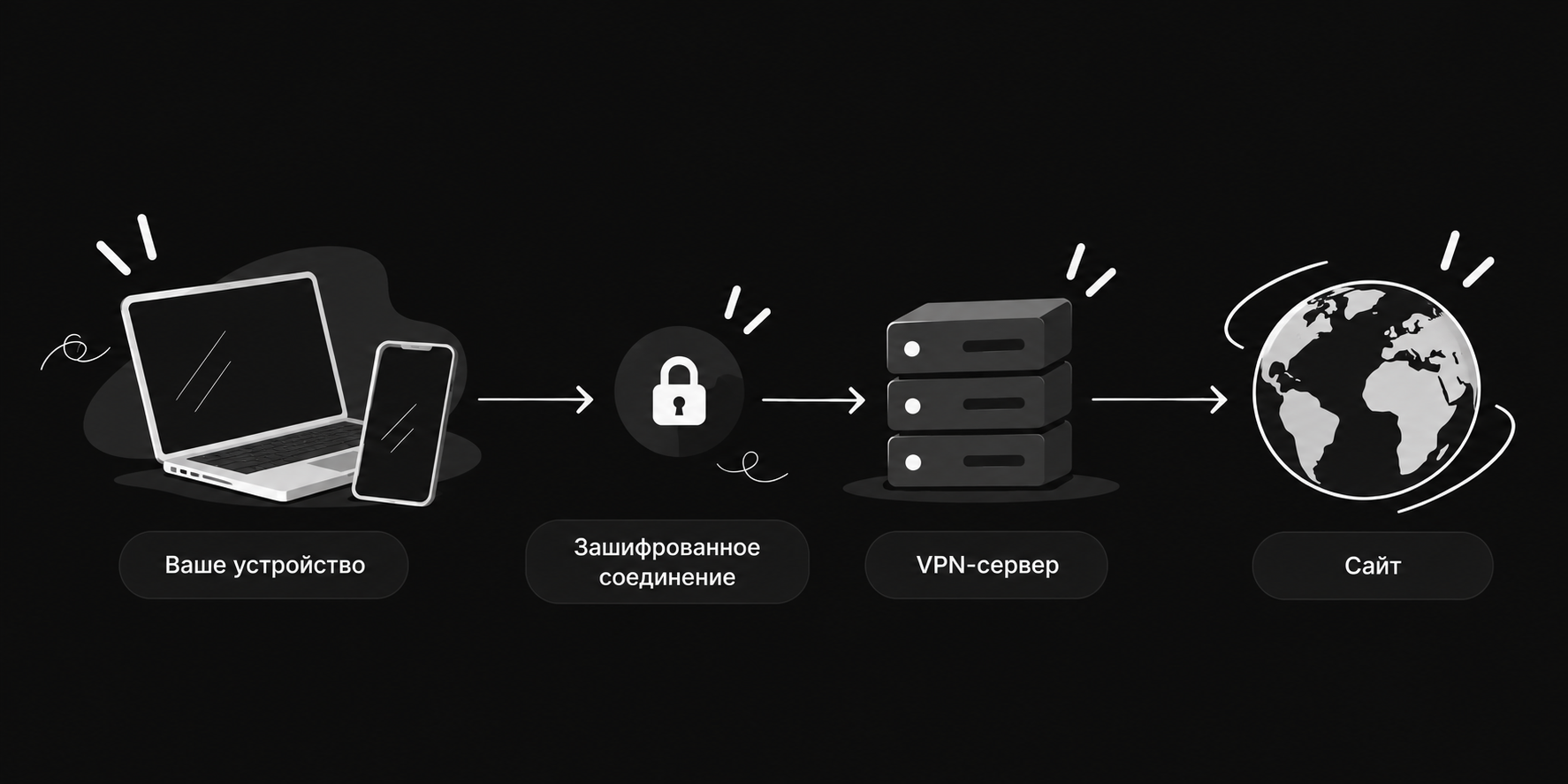
This can help protect traffic on public Wi-Fi and give you a different visible IP address. Your VPN provider becomes an important part of the route, so choose a service you trust.
What a VPN cannot do
A VPN does not replace checking website addresses, using strong passwords, or enabling two-factor authentication. It does not make you completely anonymous either: websites may still recognize your account, cookies, or other signals.
For everyday use, choose a suitable location, connect, and check that the sites you need work. If the connection is unstable, try another location or network.